Reporting Should Prevent Problems, Not Just Explain Them
In many fields, operational control doesn’t exist. Reporting begins after something goes wrong. An incident occurs, a supervisor reviews logs, reports are gathered from multiple systems, and leadership attempts to reconstruct what happened. The goal becomes explanation rather than prevention. But by the time reporting begins, the operational failure has already occurred.
Reactive reporting answers questions like:
-
What happened?
-
Who was on shift?
-
What was written in the incident report?
While these answers may help document the event, they rarely reveal why the operational gap existed in the first place. Preventive supervision requires something different: visibility into execution before incidents occur.
The Real Risk: Execution Gaps
Security operations rarely fail because tasks were not planned.
Schedules exist.
Patrol routes are defined.
Tasks are assigned.
Assets are issued.
Visitors are logged.
Yet incidents still occur. Why? Because planning alone does not guarantee execution.
Execution gaps appear when organizations cannot verify:
-
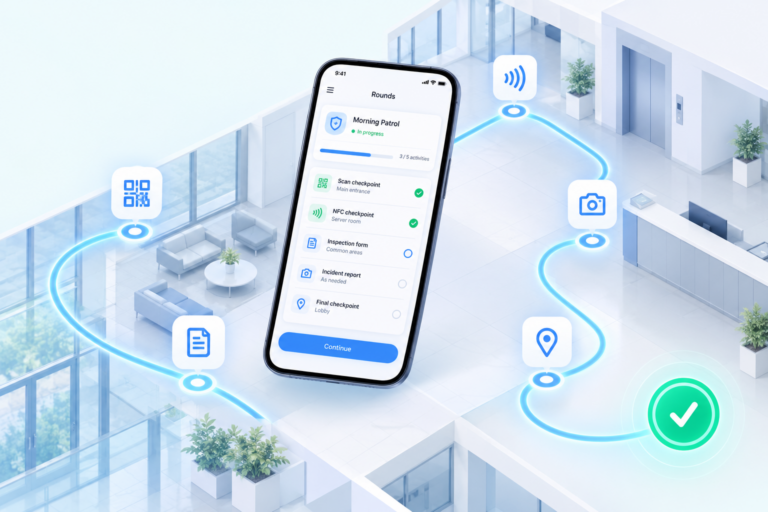
Whether patrols actually occurred
-
Whether the required tasks were completed
-
Whether guards were present where they should be
-
Whether assets were properly assigned and accounted for
-
Whether procedures were followed during a shift
When these gaps remain invisible, risk accumulates quietly inside normal operations.
Preventive Supervision Requires Operational Visibility
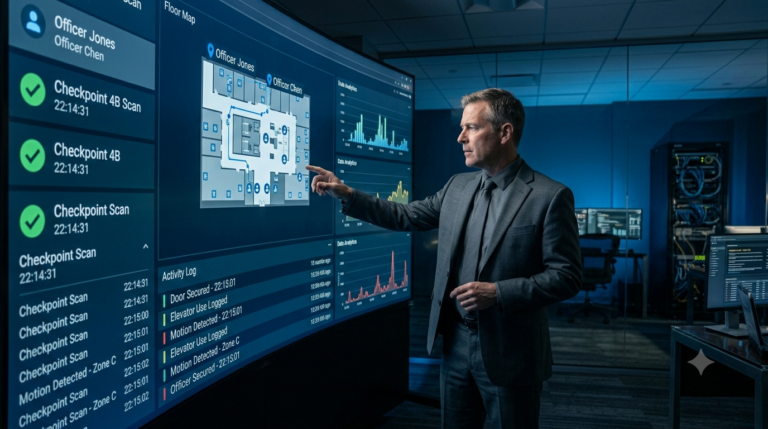
Preventive supervision means supervisors can detect execution failures early, before they escalate into operational incidents. This requires more than individual reports. It requires connected operational data. When shifts, tasks, patrol scans, incidents, assets, and site activity are analyzed together, supervisors gain a clearer picture of operational health.
Patterns become visible:
-
Repeated missed patrol checkpoints
-
Tasks consistently delayed during certain shifts
-
Incidents occurring in locations with weak patrol coverage
-
Asset assignments that do not match shift activity
-
Operational routines that gradually break down over time
This type of visibility allows supervisors to intervene early, correcting small failures before they become security incidents.
Operational Compliance: Proving That Procedures Were Followed
Another critical dimension of preventive supervision is operational compliance. Operational compliance does not refer to payroll, HR rules, or legal documentation. Instead, it focuses on whether security procedures were actually executed as designed.
For example:
-
Were patrol routes completed as scheduled?
-
Were required checkpoints scanned?
-
Were equipment and assets properly assigned during each shift?
-
Were incidents documented with proper context?
-
Were operational procedures followed at each site?
Organizations often assume compliance because procedures exist. However, real operational compliance requires evidence of execution — time-stamped, verifiable records showing that required activities actually occurred. Without this visibility, compliance becomes an assumption rather than a measurable operational reality.
Moving from Reactive Reports to Preventive Control
Modern security operations cannot rely solely on incident reports and fragmented data sources. To maintain control, organizations must shift from reactive reporting to preventive supervision.
This means:
-
Connecting operational data across systems
-
Monitoring execution in real time
-
Detecting operational gaps early
-
Verifying that procedures are consistently followed
-
Creating clear, auditable records of execution
When reporting evolves into operational intelligence, it stops being a tool for explaining incidents and becomes a tool for preventing them.
The Goal: Operational Control
Ultimately, the objective of reporting is not documentation. It is control.
Control over task execution.
Control over operational compliance.
Control over the daily activities that keep people, facilities, and assets secure.
Organizations that achieve this level of visibility do not simply react to incidents.
They detect risk early, intervene quickly, and maintain stronger operational discipline across every shift and site.