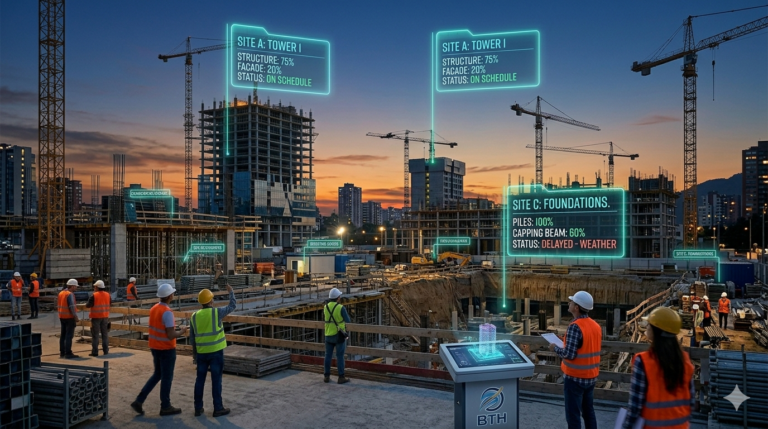
Recent technological advancements have brought about significant changes in industries such as healthcare and finance. However, the impact on the mobile workforce management environment has often been overlooked. Jobs in hospitality, janitorial services, security, and construction involve employees who are constantly on the move and without a designated desk. Thankfully, in the last few years, innovative technologies are now reshaping these sectors to benefit both workers and employers.
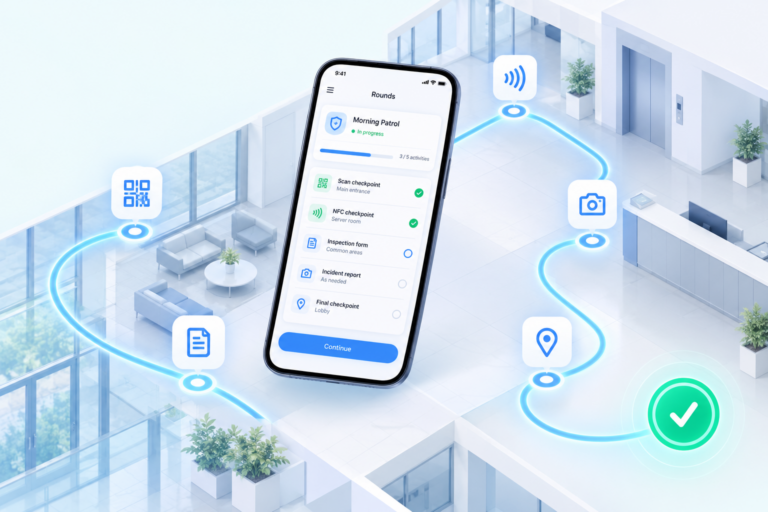
Mobile apps have become essential tools for organizing tasks and workflows in non desk job settings. For instance, in the hospitality industry, hotel staff can use apps to streamline check-ins, manage housekeeping tasks efficiently, and fulfill guest requests promptly. Similarly, janitorial and security services can optimize cleaning schedules, monitor inventory levels effectively, and maintain real-time communication between employees and managers through applications.
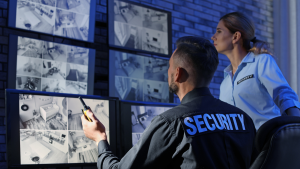
Wearable technology is playing a crucial role in enhancing safety and productivity for deskless employees, particularly within security and construction fields. Smartwatches and wearable sensors can efficiently monitor signs and identify hazards at worksites, alerting workers about any impending dangers proactively. In the field of construction, supervisors can keep track of employees’ locations and ensure safety compliance by using devices with GPS tracking features.
IoT Sensors Enhancing mobile workforce management:
The Internet of Things (IoT) is transforming how facility management operates in workplaces without desks. Companies can enhance energy efficiency, identify equipment issues, and manage resources better by deploying sensors within buildings. For instance, in the cleaning industry, enabled equipment can adjust cleaning schedules based on occupancy levels automatically, leading to improved efficiency and cost-effectiveness.
Utilizing Virtual Reality (VR) for Training:
Training plays a crucial role in industries such as construction and security, where workers are exposed to various tasks and environments. Virtual Reality (VR) technology provides a training environment where employees can simulate real-world scenarios without any actual danger. Construction workers can practice using machinery, while security personnel can train for emergency situations through simulated drills, enhancing their readiness and response skills.
Artificial Intelligence (AI) and Augmented Reality (AR) in mobile workforce management:
Artificial intelligence (AI) is increasingly employed to analyze datasets and produce insights in workplaces without traditional desks. In the hospitality sector, AI-driven algorithms predict guest preferences and optimize room pricing strategies to personalize guest experiences effectively. AI-driven analytics also support services in predicting maintenance requirements, organizing cleanings efficiently, and managing resources wisely.
Augmented reality (AR) technology is transforming field service assistance in sectors like construction and janitorial services. AR-equipped smart glasses offer hands-free access to guides, troubleshooting manuals, and remote help from experts. In construction, AR superimposes blueprints onto structures, enabling workers to visualize construction progress and detect potential errors beforehand.
Remote Monitoring and Collaboration Tools:
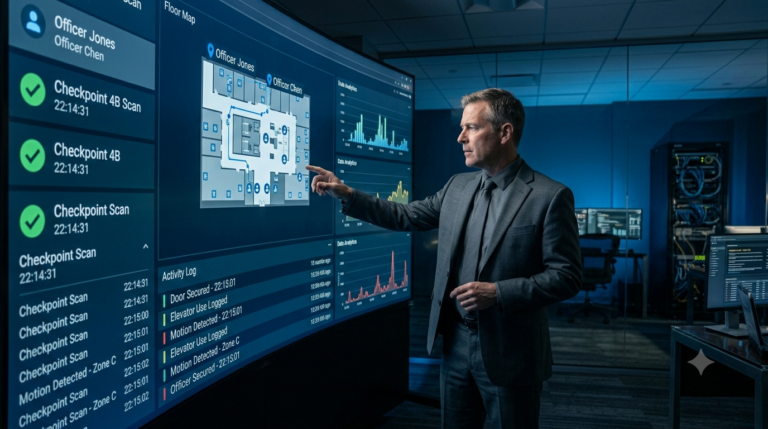
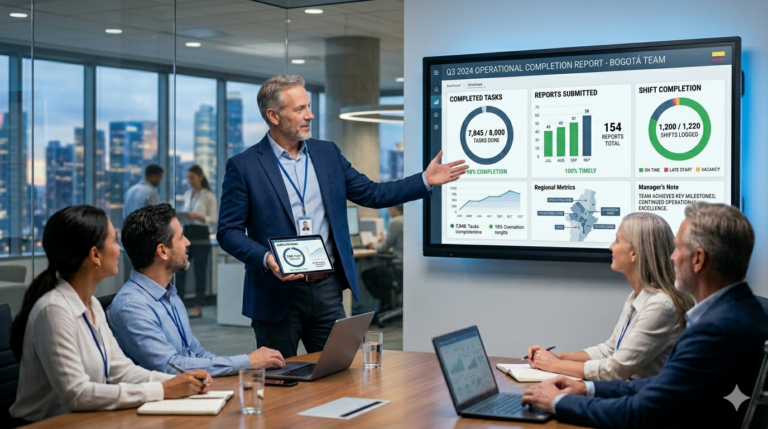
Given the increasing prevalence of non-desk jobs, employees need tools that promote communication and collaboration regardless of their location. Cloud-based platforms and collaboration tools are more than a perk in the mobile workforce management world, they are a need. Tech enables team members to communicate in real-time, facilitating decision-making and issue resolution. In the security sector, remote monitoring systems empower security staff to oversee locations from a distance, thereby enhancing overall safety and surveillance capabilities.

In summary, the incorporation of technology into deskless work environments is reshaping industries such as hospitality, janitorial services, security, and construction. From apps for task management to gadgets for safety and efficiency enhancement, these technological advancements are boosting productivity, safety levels, and collaborative efforts among non-desk workers. As these advancements progress, companies need to seize the opportunities they offer to remain competitive in a shifting work environment.