Incidents Don’t Start as Incidents
In most operations, incidents feel sudden. A failure is reported, a complaint is raised, or a client escalates an issue. From that moment on, the focus shifts to understanding what went wrong. It often feels like the problem appeared out of nowhere. But in reality, incidents rarely begin at the moment they are discovered.
They are usually the result of small, repeated execution gaps that occurred over time, in other words, an operational risk. Tasks that were not completed, activities that were inconsistent, or processes that were not followed exactly as expected. Individually, these moments may seem insignificant. Collectively, they form patterns.
And those patterns are what eventually lead to incidents.
The Problem with Fragmented Operations
One of the main reasons these patterns go unnoticed is that operations are often viewed in isolation. Information exists, but it is scattered. Schedules may live in one system, tasks in another, activity logs somewhere else, and incidents in separate reports. Each piece provides a partial view of what is happening, but none of them tell the full story on their own.
When operations are analyzed in this way, everything can appear normal at a surface level. Each system reflects its own version of reality, but the connections between them remain hidden. And it is within those connections that operational risk begins to take shape.
When Systems Connect, Patterns Emerge
When operational data is brought together into a unified view, something changes.
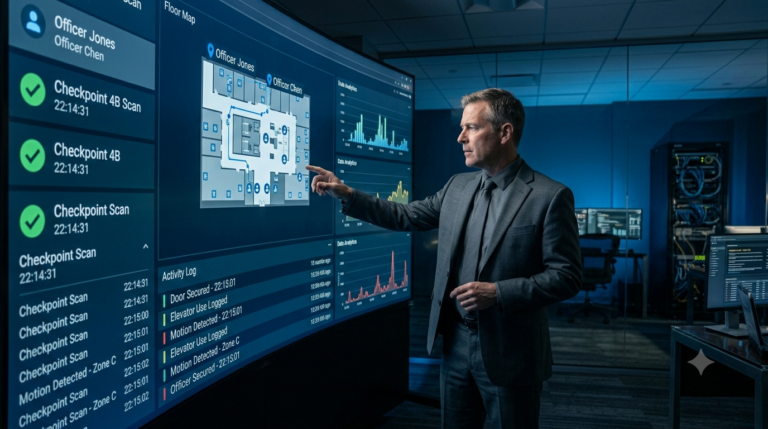
Instead of looking at isolated data points, organizations begin to see relationships between them. Activities can be understood within the context of shifts, execution can be evaluated over time, and incidents can be analyzed alongside the conditions that surrounded them.
This is when operational risk patterns start to appear.
What once looked like isolated issues becomes a series of repeated signals. Execution may consistently break down during certain shifts, or specific locations may show recurring inconsistencies. Over time, these signals begin to tell a story about how operations are actually performing.
These are not random occurrences. They are indicators of underlying weaknesses that would otherwise remain invisible.
Operational Risk Patterns as Early Warning Signals
Risk patterns are often the earliest indication that something is not working as expected. They do not appear as major failures at first. Instead, they show up as subtle inconsistencies in execution. A task completed late here, an activity missed there, a process followed differently depending on the shift.
Because each instance seems minor, it is easy to overlook them. But when viewed over time and in context, these inconsistencies reveal something more important. They show where operational discipline is weakening and where risk is beginning to accumulate.
Organizations that can detect these patterns early gain a significant advantage. They are no longer waiting for incidents to occur. They are identifying risk while it is still manageable.
From Reactive Reporting to Preventive Insight
Traditional reporting focuses on explaining what has already happened. It provides visibility after an incident has occurred, helping teams understand the outcome. While this is necessary, it is not enough to prevent future issues.
Detecting risk patterns requires a shift in perspective. It requires looking at operations continuously, not just at isolated moments. It means understanding how execution behaves over time and recognizing where consistency begins to break down.
When organizations adopt this approach, they move from reacting to problems to anticipating them. They are able to intervene earlier, correct small deviations, and maintain stronger control over their operations.
Operational Compliance and Pattern Detection

There is also a strong connection between risk patterns and operational compliance.
When procedures are not consistently followed, patterns begin to form. Not always in obvious ways, but through small deviations that repeat over time. Without visibility, these deviations remain hidden and compliance is assumed rather than verified.
However, when execution is tracked and analyzed across time, compliance becomes something that can be clearly measured. Patterns of non-compliance begin to surface, making it possible to address the root causes rather than isolated symptoms.
This transforms compliance into an active part of operations, rather than a periodic check.
Making the Invisible Visible
Detecting risk patterns does not require more reports or more manual oversight. It requires better visibility.
When operational data is connected and presented clearly, patterns that were once hidden become easier to identify. Leaders and supervisors can begin to see where execution is consistent and where it starts to break down.
This level of clarity changes how operations are managed. Instead of relying on assumptions or delayed information, teams can maintain a continuous understanding of performance.
And with that understanding comes the ability to act earlier.
Operational Risk Is Built, Not Triggered
Incidents are rarely the starting point. They are the result of what has been building over time.
Risk develops quietly, through small gaps in execution that go unnoticed when systems are disconnected. But when those systems begin to work together, those gaps become visible. And once they are visible, they can be addressed.
Operational Risk is not something that suddenly appears. It is something that builds, and with the right visibility, it can be detected long before it becomes an incident.