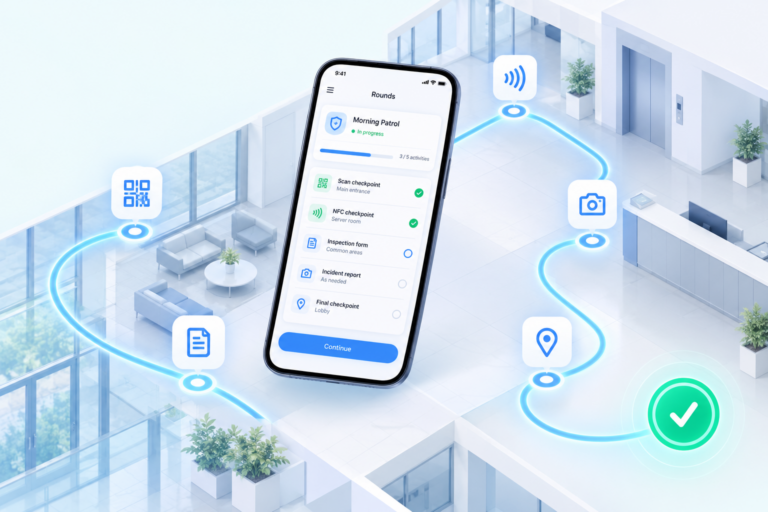
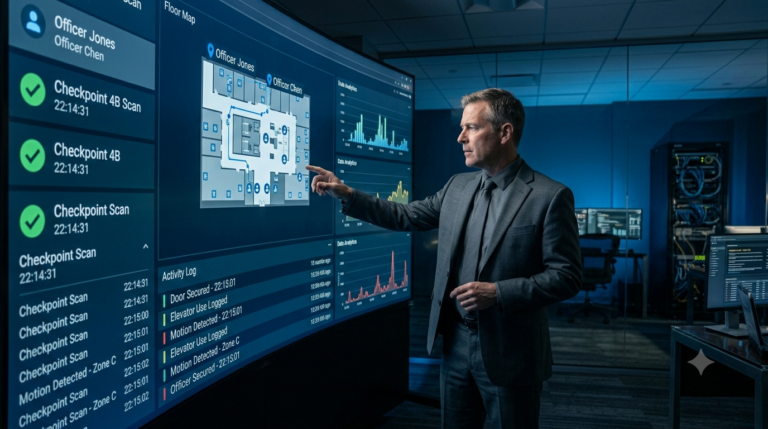
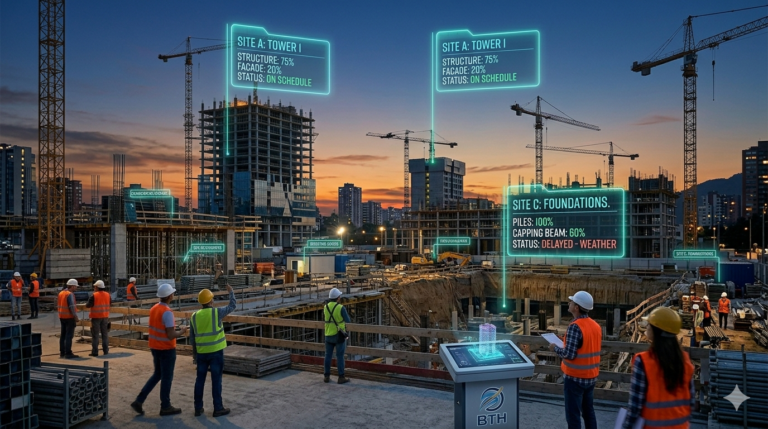
For decades, many organizations have relied on trust, manual reporting, and verbal confirmations to determine whether work was completed as expected. Security patrols were assumed to be conducted. Site inspections were assumed to be completed. Facility visits were assumed to happen on schedule.
The challenge is that assumptions create blind spots. In today’s modern operational environment, managers are responsible for more locations, more personnel, and higher client expectations than ever before. Whether overseeing security teams, janitorial staff, facility maintenance crews, contractors, or mobile workforces, leaders need more than assurance; they need visibility.
The question is no longer whether teams are doing their jobs. The question is whether organizations have the tools to verify and demonstrate that work was completed.
The Cost of Operating on Assumptions
When coverage cannot be verified, uncertainty becomes part of daily modern operations. A manager may receive a report stating that all required rounds were completed. A contractor may confirm that a property was visited. A team member may indicate that inspections were performed according to schedule. While these reports may be accurate, they often leave no objective proof behind.
This lack of visibility can create operational challenges that extend beyond simple oversight. Missed patrols, incomplete inspections, forgotten tasks, and delayed responses can go unnoticed until a client raises a concern or an incident occurs.
At that point, organizations often find themselves searching for answers that should have been available from the start.
Modern Operations = Verification = Confidence
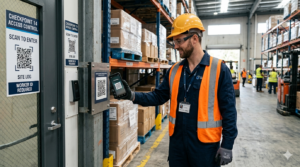
Technology has fundamentally changed the way organizations manage field operations. Instead of relying solely on manual reports, modern operations rely on checkpoint and scanning systems create a real-time record of activity as it happens. Every scan tells a story. It confirms that a person was physically present at a specific location, at a specific time, performing a specific responsibility.
This transforms operational management from a process based on assumptions into one based on facts, into modern operations. Managers no longer have to wonder whether a checkpoint was visited or whether an inspection was completed. They can see it.
The difference may seem simple, but its impact is significant. When information is verified in real time, decisions become faster, accountability becomes clearer, and confidence increases across the organization.
If a Checkpoint Wasn’t Scanned, It Wasn’t Covered
One of the most powerful concepts in operational accountability is also one of the simplest. If a checkpoint wasn’t scanned, there is no verified proof that it was covered.
This isn’t about questioning employees or creating unnecessary oversight. Modern operations mean establishing a clear and objective standard for measuring operational performance. When every required checkpoint, inspection point, or location visit is documented, organizations gain a complete picture of what is happening in the field. Gaps become visible immediately rather than days or weeks later.
More importantly, completed work becomes undeniable. Employees receive credit for the work they perform, supervisors gain confidence in their teams, and clients receive documented proof that services were delivered.
Real-Time Visibility Changes the Way Organizations Operate
The true value of verification extends far beyond simply proving that someone was present. Real-time visibility gives managers the ability to identify issues while they can still be corrected. A missed checkpoint can trigger immediate follow-up. An incomplete patrol can be addressed before a shift ends. A missed site visit can be reassigned before it impacts service quality.
Instead of discovering problems after reviewing reports, organizations can respond as events unfold. This shift from reactive management to proactive management allows teams to operate more efficiently and consistently. It also creates a stronger foundation for compliance, risk management, and client satisfaction. This is what modern operations are. No more worrying. No more wondering. Just proof.
Building Trust Through Transparency
Ironically, verification often strengthens trust rather than replacing it. Modern operations is when work is automatically documented, conversations become less about questioning whether something happened and more about improving performance and outcomes. Everyone operates from the same set of facts.
Employees can confidently demonstrate their efforts. Supervisors can support decisions with data. Clients can receive proof of service delivery without waiting for manual reports.
Transparency eliminates uncertainty and replaces it with clarity. In an environment where accountability matters, that clarity becomes a competitive advantage.
The Future of Presence, Coverage, and Access Management
Organizations today are under increasing pressure to prove that services are being delivered consistently, safely, and according to expectations. Clients want greater transparency. Leadership teams want better visibility. Compliance requirements continue to grow. Your clients want modern operations.
As a result, proving presence, coverage, and access has become a critical component of operational success.
Presence is no longer assumed. Coverage is no longer estimated. Access is no longer based on memory or paperwork.
Every visit, every patrol, every checkpoint, and every completed task can be verified in real time.
The organizations that embrace modern operations are not simply collecting data, they are building a culture of accountability, transparency, and operational excellence. And in a world where performance must be demonstrated, not assumed, that makes all the difference.